ADA Mobile Toilet Rental for Occasions: Comprehending Accessible Device Demands
Planning bathrooms for an event tends to start as a logistics exercise and quickly ends up being something much more personal. The moment you envision a guest showing up in a wheelchair, a parent helping a grown-up kid with a special needs, or an older participant that requires extra area and a secure grab bar, the concern quits being abstract. It becomes regarding whether someone can take part with dignity, without trouble, and without having to request special treatment on the spot.
That is why an ADA mobile toilet rental ought to never be dealt with as a box to inspect at the end of the planning procedure. For public occasions, festivals, neighborhood celebrations, and comparable temporary arrangements, access has to be developed right into the toilet plan from the beginning. If it is left up until the site map is already locked, coordinators often uncover far too late that the ideal device count was not bought, the ground conditions are bad, or the positioning forces people to travel an unequal path that defeats the function of having an easily accessible unit in the first place.
The excellent information is that the standard government structure is clear. For mobile restroom collections in the United States, the controlling standard is the 2010 ADA Specifications for Accessible Design, as interpreted by the Gain access to Board and the Division of Justice. Those requirements do not disappear even if the bathrooms are momentary. A short-lived event can still produce genuine gain access to barriers, and the policies mirror that.
The requirement event planners most often miss
The point that shocks numerous organizers is straightforward: when you have a collection of portable single-user commode systems, a minimum of 5 percent of the systems because collection have to be accessible. The Gain access to Board has made clear that this uses also at short-lived events.
That matters because individuals frequently assume one ada portable toilet someplace on site is enough. Often it is, occasionally it is not. The answer depends upon the size of the cluster. If your occasion has one toilet financial institution near the entryway and another near the food location, each collection needs to be taken into consideration by itself. The requirement is not almost the complete number of units spread out across the residential or commercial property. It has to do with accessible accessibility where toilet groupings are really provided.
In method, this is where troubles begin. I have seen site strategies where the conventional units were smartly dispersed throughout the place, yet the single ada certified mobile bathroom was positioned off sideways in an entirely different area because that was the only spot of flat ground left. On paper, an accessible system existed. In real usage, it created added travel, complication, and a sensation that handicapped guests had been rerouted to a different option. That is hardly ever the experience an organizer wants to create.
Accessibility functions best when the ada easily accessible portable bathroom becomes part of the exact same bathroom technique every person else utilizes. Individuals should not have to quest for it, ask staff where it is, or browse a course that was never ever really intended for movement devices.
Temporary does not imply exempt
One of one of the most consistent misconceptions around ada portable bathroom requirements is the idea that momentary facilities are somehow outside the scope of ease of access rules. That is not the case for basic portable bathroom rentals utilized by the public at events.
The standards do make a distinction involving mobile systems at construction sites when those systems are utilized exclusively by building employees. That slim context is usually repeated misplaced, and it can create confusion. Event coordinators hear that construction-site portable units might be treated differently in a particular regulative context and erroneously think the same versatility puts on shows, races, street fairs, wedding celebrations, or local events. It does not adhere to that way.
For a public-facing event, the safer and much more accurate attitude is this: if you are bringing in portable restrooms for guests, accessibility becomes part of the plan. A certified technique does not depend on whether the devices are long-term structures or short-term services. It depends upon whether individuals can use them.
What makes a portable bathroom accessible
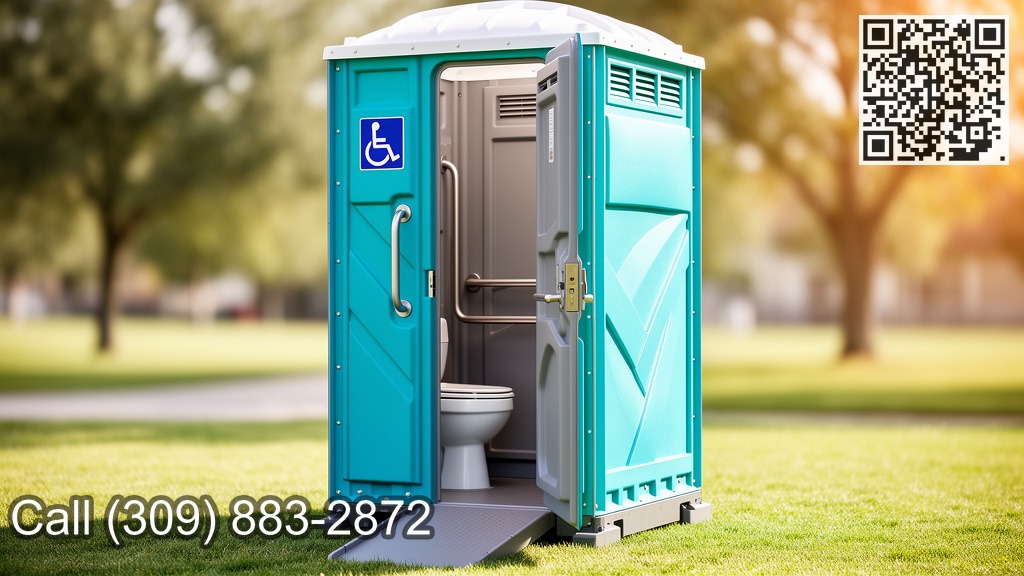
An ada certified available portable bathroom is not just a larger box with a various label. The criteria call for more than extra flooring location. The device should meet applicable commode room technical demands, consisting of clearances for the fixture, turning area, and door maneuvering clearances, in addition to applicable water wardrobe clearance rules and get hold of bar requirements.
That distinction issues because many individuals casually make use of expressions like "wheelchair-friendly" or "handicap device" without actually recognizing what functions are needed. An ada handicap obtainable mobile washroom has to support actual activity and real usage inside the area. A guest might need to get in, transform, place beside the toilet, shut the door, use grab bars for transfer, and leave safely. If any type of one of those steps is obstructed, the device might exist however not genuinely usable.
This is one factor experienced occasion groups ask in-depth questions prior to verifying an ada portable toilet service. They do not just ask whether an easily accessible unit is available. They ask whether the device is intended to satisfy ADA access expectations, whether it is properly identified, and whether the planned positioning supports accessible use once it gets to the site.
There is another practical layer here. Accessibility is not just about the interior of the unit. The course to the system and the entrance itself matter equally as much.
The path to the system is part of compliance
A typical preparation blunder is to focus entirely on the washroom itself while neglecting the travel path leading to it. The Accessibility Board support explains that mobile accessible devices must have an obtainable course and entrance. If ramps or touchdowns are required, those elements likewise have to abide by ADA technical requirements.
This is where or else mindful occasion plans can unwind. A supplier might deliver an ada compliant portable restroom precisely as ordered, but if it is put across loosened gravel, behind a curb side, at the end of a sloppy slope, or where a short-lived ramp configuration does not satisfy the requirement, the result is still a barrier.
On occasion day, these barriers show up in really normal methods. A visitor stops at the start of a harsh course and determines it is not worth the struggle. A member of the family has to ask personnel for help. Somebody who expected independent access needs to depend on others. None of that looks dramatic in a site map review, but it matters deeply in the moment.
For that reason, bathroom planning need to start at the ground level, literally. Prior to completing placement, it helps to walk the course yourself and imagine utilizing it with limited mobility, a scooter, a pedestrian, or a mobility device. If the solution is "it may be tough," it most likely is.
Identification is not a tiny detail
Accessible portable commode units need to be identified with the International Symbol of Ease Of Access. This is a certain requirement, and it serves a useful objective. Individuals require to be able to situate the system without guesswork.
That may appear noticeable, but in busy event atmospheres, noticeable details are often the first to slide. Signage gets obstructed by secure fencing. Systems are revolved during configuration. A row of bathrooms ends up facing a crowd-control passage that makes the markings hard to see. Staff think guests will ask for directions if required. Many will certainly not.
An accessible unit that is difficult to determine produces a subtle form of exclusion. It informs visitors that their demands were practically acknowledged however not thoughtfully fit. Good recognition assists avoid that. It likewise helps team take care of questions efficiently, specifically when the site is crowded or noisy.
There is a more comprehensive concept right here. Availability attributes function best when they are visible, incorporated, and understandable. The even more a visitor needs to bargain or translate the arrangement, the less available it really feels, also https://riverfxrm077.pinehavenscope.com/posts/ada-certified-portable-commode-rental-and-obtainable-entrance-compliance if the core requirement has been met.
Counting devices appropriately at event clusters
The 5 percent regulation sounds straightforward until a website comes to be large sufficient to include numerous toilet locations. After that coordinators have to believe very carefully concerning what counts as a cluster and just how individuals will in fact relocate through the venue.
If one cluster serves the primary gate and an additional serves a remote field or efficiency location, it is insufficient to rely upon one obtainable system at just one area if the obtainable requirement exists throughout the site. The criteria relate to each cluster of portable single-user bathroom devices. That is the operational lesson numerous teams learn after their first big event.
A helpful way to think of it is not in regards to supply, however in regards to gain access to factors. Wherever you develop a toilet location for the public, ask whether that location consists of an accessible option in the percentage needed. This moves the frame of mind from "Do we have one someplace?" to "Can individuals make use of toilets where they are, without additional problem?"
Here is a short preparation check that typically keeps groups out of difficulty:
- Identify each toilet cluster on the event map as opposed to counting all units sitewide as one total.
- Confirm that a minimum of 5 percent of the units in each collection are accessible.
- Make sure the obtainable unit is noted with the International Symbol of Accessibility.
- Check the route, entry, and any ramp or landing problems prior to shipment day.
- Recheck placement after configuration, since site adjustments frequently occur in the final hours.
Those five steps do not replace legal testimonial or vendor knowledge, but they catch many of the useful failings that occur in between buying and opening.
The compromise between comfort and appropriate placement
Event sites seldom provide excellent problems. The flattest location may be farther from the crowd. One of the most central area may produce blockage. A vast course may contravene power line, camping tent stakes, or secure fencing. This is where judgment comes in.
I have seen organizers position an ada certified portable commode in a remote area since the grade there was much better. I have actually additionally seen teams insist on a main area even though the approach was rough adequate to undermine accessibility. Neither choice is excellent by default. The better answer usually comes from resolving the path issue and maintaining the unit where people naturally anticipate washroom accessibility to be.
That can need earlier sychronisation with the entire operations team. The restroom vendor alone can not solve a poor site strategy. If the easily accessible course goes across a service lane, somebody might need to reroute website traffic. If the ground is unpredictable, the venue team may require to resolve the surface. If a ramp or landing is necessary, its compliance can not be dealt with as an afterthought.
This is among those locations where empathy boosts preparation. When you think of a handicapped guest arriving weary, in a crowd, during warmth or rain, your resistance for "close adequate" generally goes down. That is a healthy and balanced instinct.
Language matters, but function issues more
In the rental market, you will listen to numerous overlapping phrases: ada portable washroom, ada mobile toilet, ada compliant portable toilets, ada-compliant mobile washrooms, and ada compliant easily accessible portable washrooms. Individuals use them mutually, and in table talk that is reasonable. What issues most is not the tag in the quote sheet, however whether the device and its installation satisfy the accessibility requirements that apply.
That indicates asking sensible, grounded concerns. Is the device planned as an ADA-accessible option? Will it be plainly determined? Has the placement been examined for obtainable approach and entryway? Does the occasion map reward availability as part of the toilet format, not a side note?
A great deal of disappointment can be stayed clear of when the coordinator, rental firm, and site crew all use the very same meaning of success. Success is not "an accessible unit was supplied." Success is "a guest who needs it can locate it, reach it, enter it, maneuver inside, utilize it, and leave without unnecessary trouble."
Where coordinators obtain exposed
The more comprehensive compliance environment around the ADA has just end up being a lot more active, not much less. Even outside physical website preparation, access assumptions are receiving attention throughout markets. That more comprehensive pattern matters due to the fact that it mirrors a genuine enforcement climate. Event access is not a drowsy back-office concern. It is part of a bigger understanding that access commitments stay vital across styles, including short-lived ones.
For occasion drivers, this suggests restroom availability must be treated with the very same severity as crowd safety, emergency accessibility, and cleanliness planning. It is not rare or particular niche. At virtually any kind of public occasion, a person will require the additional space, turning space, or support features offered by an ada-compliant mobile toilet.
The threat of obtaining it incorrect is not only governing. It is reputational and human. Visitors remember when they were forced into a hard or humiliating situation. Families bear in mind when a straightforward outing became a stressful scramble to locate a functional washroom. Those are the minutes that form whether people come back next year.
A sensible conversation with your rental provider
The ideal ada mobile bathroom rental discussions specify. Obscure demands invite vague results. Claiming "we require one handicap bathroom" frequently results in assumptions. Claiming "we require accessible units in each mobile toilet collection, with obtainable paths and clear identification" is much tougher to misunderstand.
It likewise aids to talk early. Obtainable stock can be extra minimal than standard stock throughout height event periods, particularly for weekend breaks when events, races, and area occasions stack up. Waiting up until the last minute can leave you with fewer placement selections and more pressure to compromise.
If you are handling a multi-zone event, bring a website map to the discussion. Talk with each cluster. Describe the surface honestly. Confirm who is in charge of last placement and that will verify course conditions once other framework is set up. A tidy quote is just the beginning. Compliance commonly relies on the final 10 feet around the unit.
These questions are worth asking prior to you lock anything in:
- Which toilet groupings on our map count as separate clusters for planning purposes?
- Where will certainly each ada accessible portable bathroom be placed within those clusters?
- How will certainly guests reach each accessible unit by an easily accessible route?
- Will any kind of ramp or landing problems need unique attention at the site?
- How will the systems stay clearly identified once all fence, barriers, and indications are installed?
That is not overplanning. It is the level of detail that protects against uncomfortable surprises on event day.
The distinction visitors can feel
When obtainable toilet planning is succeeded, lots of people hardly observe it, which is specifically the factor. The available system is where it needs to be. The path really feels regular. The signage is clear. Nobody needs a personnel escort. No one has to explain their disability to a volunteer simply to find a restroom.
When it is done poorly, the contrary occurs. The available system might practically exist, yet every action around it indicates that the individual was not actually taken into consideration. For an individual who takes care of accessibility obstacles on a regular basis, that feeling knows and exhausting.
Empathetic planning adjustments that experience. It does not need grand gestures. It needs precision, interest, and regard for just how individuals really relocate via space. With ada certified mobile toilets, the regulation provides the structure, however the quality of implementation is what visitors remember.
For occasion coordinators, that is the real standard to aim for. Not bare minimums. Not presumptions. A toilet strategy that benefits the people who require it most, in the exact same useful, typical way it helps everyone else.
 Ask ChatGPT
 Ask Grok
 Ask Perplexity
 Ask Claude
 Ask Google AI
 Ask You